Minimalism for Small Spaces: Tips That Simplify Life
Minimalism for small spaces looks simple online. In a small apartment, it is not abstract. It is practical.
When you live in a one-bedroom, studio, or compact rental in the U.S., every item competes for square footage. Closets are shallow. Cabinets are limited. Walls cannot always be drilled into. Storage is finite.
If you need practical layout systems before reducing belongings, exploring small apartment storage solutions that actually work can help create structure first.
Over time, I learned that minimalism only works in small spaces when it reduces friction. If it creates new rules to manage, it fails. If it requires constant rearranging, it is not sustainable.
This guide shares minimalism for small spaces tips to simplify life based on what holds up in real apartments. No aesthetic ideal. No dramatic claims. Just systems that make daily living easier.
1. What Minimalism Means in Small Spaces
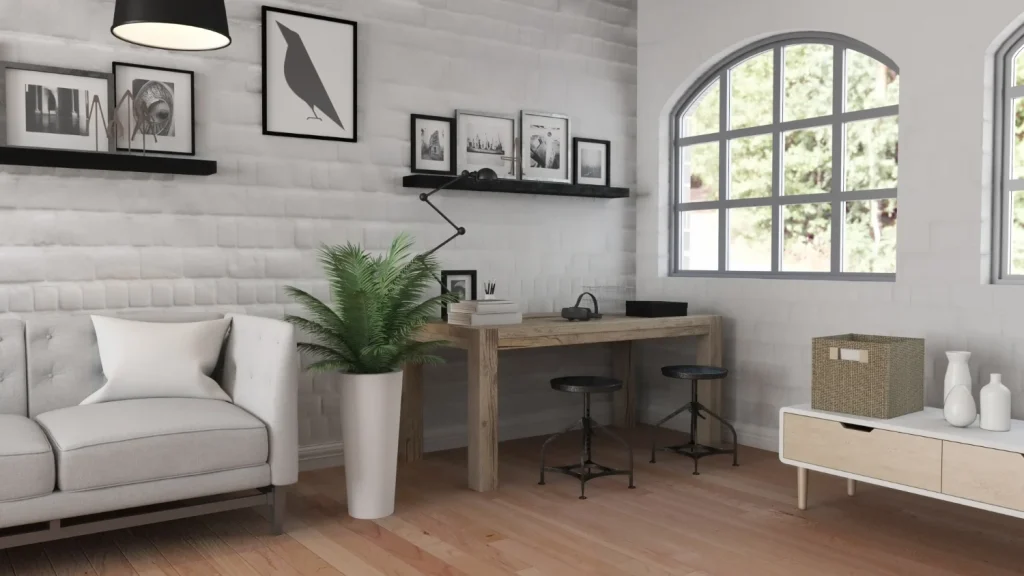
In a compact apartment, minimalism is not about owning the least. It is about owning what fits your actual routines.
Functional minimalism focuses on:
Fewer, purposeful items
Reduced cleaning time
Clear walking paths
Lower decision fatigue
The benefit is not visual emptiness. It is operational simplicity.
There is a difference between aesthetic minimalism and functional minimalism. Aesthetic minimalism prioritizes visual uniformity. Functional minimalism prioritizes use. In small apartments, use matters more.
2. Declutter With Clear Criteria
Decluttering without structure leads to hesitation.
Use criteria instead of emotion.
Keep:
Items used daily
High-value items
Multipurpose tools
Remove:
Duplicates
Items unused for 6 to 12 months
Impulse purchases
Apply the one-touch rule. Pick up the item once. Decide. Do not move it between piles repeatedly.
Use a simple three-box method:
Keep
Donate
Discard
These minimalist home decluttering ideas reduce time spent deciding.
Minimalist living in small spaces works best when decisions are quick and repeatable.
3. Define Functional Zones
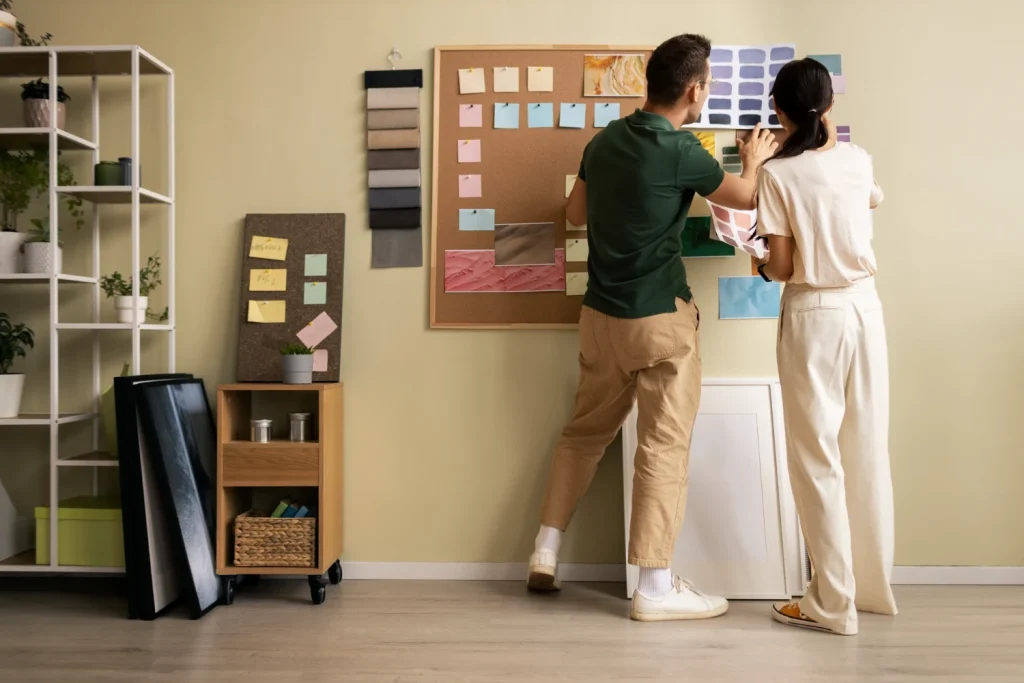
Even in a studio, define zones.
Sleeping zone.
Work zone.
Relaxation zone.
Dining zone.
Assign storage to each zone. Avoid cross-zone clutter.
For example:
Work supplies stay in the work zone.
Bedding stays near the bed.
Gym equipment does not migrate into the kitchen corner.
Small space minimalism tips often fail because zones are blurred. When items move between areas, friction increases.
Clear zoning simplifies how to simplify your life with minimalism in a measurable way.
4. Choose Multi-Functional Furniture

In small apartments, furniture must justify its footprint.
Consider:
Storage ottoman
Foldable desk or wall-mounted table
Sofa bed
Bed with drawers
Nesting tables
These are space-saving minimalism strategies, not style decisions.
I removed a second side table in my apartment and replaced it with a wall-mounted shelf. The walking path improved immediately. Cleaning time dropped.
Reducing physical obstacles is part of minimalist organization for small apartments.
5. Limit Visible Items
Visual clutter increases cognitive load.
A simplified environment also supports focus, which is why daily habits to boost mental clarity become easier to maintain in a clutter-free space.
Keep:
Countertops mostly clear
Open shelving minimal
Decorative items limited
Follow the rule: one surface, one purpose.
Kitchen counter for food prep.
Desk for work.
Nightstand for essentials only.
Minimalist decorating ideas for small spaces should reduce maintenance, not add styling tasks.
6. Optimize Vertical Space
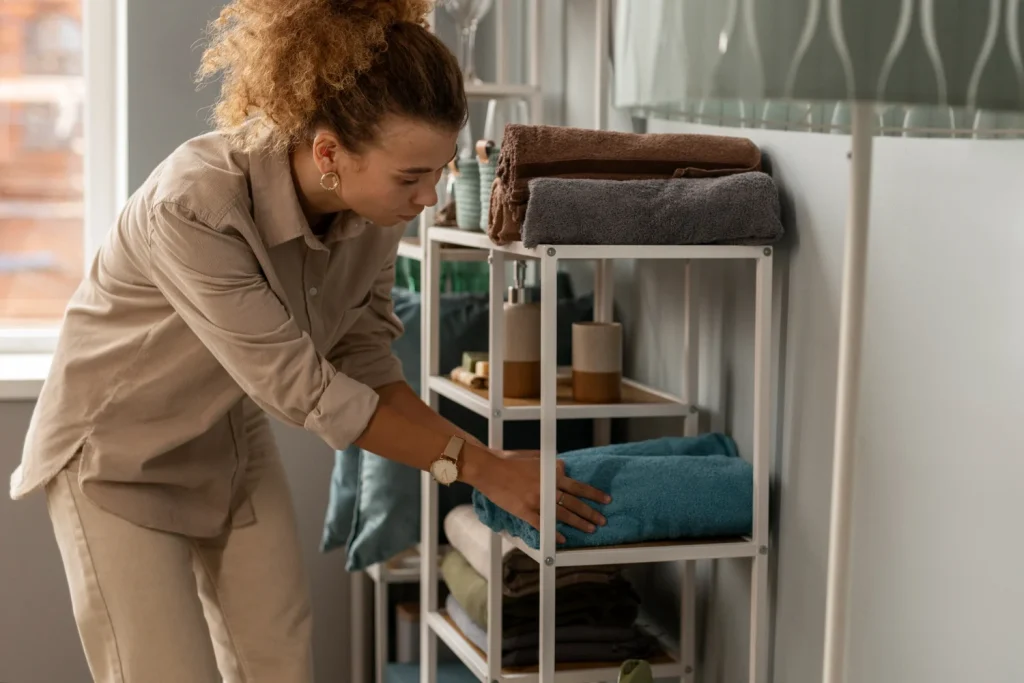
Floor space is limited. Walls are underused.
Practical vertical upgrades:
Tall shelving units
Wall hooks
Floating shelves
Over-the-door organizers
Ceiling-height storage
Vertical systems reduce the need for extra furniture.
These are measurable space-saving minimalism strategies. They increase storage without shrinking pathways.
7. Create Capsule Systems
Capsules simplify decisions.
Capsule wardrobe:
Core color palette
Interchangeable pieces
Fewer seasonal duplicates
Capsule kitchen:
One quality knife
One skillet
One pot
Limited utensils
Streamlined toiletries:
Daily essentials only
Replace empty before adding new
Similarly, a focused skincare routine for combination skin in humid climates reduces unnecessary products and supports minimalist storage habits.
Keeping routines structured, such as following a daily grooming routine for busy professionals, prevents product overflow and keeps bathrooms functional.
Digital minimalism matters too:
Delete unused apps
Disable non-essential notifications
Organize files monthly
Minimalist habits for simpler living extend beyond physical items.
8. Reduce Furniture Quantity
Count the number of furniture pieces in your main room.
Remove:
Bulky accent chairs
Redundant side tables
Unused storage trunks
Maintain open walking paths. Prioritize negative space.
Open space is functional space.
Tiny home minimalist lifestyle ideas often emphasize openness for a reason. It increases mobility and simplifies cleaning.
9. Daily Maintenance Habits
Minimalism collapses without maintenance.
Daily:
10-minute nightly reset
Immediate put-away rule
Weekly:
Quick declutter sweep
Monthly:
Inventory check
Consistency habits for clearer mind apply to physical space as well.
These easy minimalism steps for clutter free home prevent buildup.
10. Storage Simplicity Rules
Storage should be uniform and visible.
Use matching bins
Label clearly
Avoid overbuying organizers
Store by frequency of use
High-use items at eye level.
Occasional items higher or lower.
Storage systems must remain easy to maintain.
11. Minimalist Mindset Practices
Minimalism is sustained by purchasing behavior.
Before buying:
Delay 24 hours for non-essential items
Ask where it will be stored
Remove one item if adding another
Track spending on physical goods monthly.
Intentional living tips for minimalists often focus on awareness, not restriction.
Minimalist mindset tips for small homes reduce incoming clutter before it arrives.
12. 30-Day Simplification Plan
Week 1: Declutter major categories
Week 2: Optimize storage and zones
Week 3: Simplify wardrobe and kitchen
Week 4: Refine systems and maintain routines
This phased approach prevents burnout.
Minimalistic lifestyle tips 2026 increasingly emphasize sustainability over speed. Gradual refinement is more realistic than a single weekend purge.
13. Common Mistakes to Avoid
Decluttering without a system
Over-decorating in the name of minimalism
Buying excessive storage products
Ignoring daily reset routines
Another common mistake is aesthetic comparison. Your apartment does not need to resemble curated design blogs. It needs to function for your daily life.
The same practical approach applies to clothing, where stylish urban outfit ideas for commuters emphasize versatility over excess.
Minimalism should reduce complexity, not add new standards to meet.
14. Results to Expect
After consistent application, expect:
Reduced visual noise
Easier cleaning
Faster daily decision-making
More functional living space
Not dramatic transformation. Not instant clarity.
Just less friction.
In small apartments, that difference is noticeable.
Final Perspective
Minimalism in small spaces is not a philosophy. It is a design response to limited square footage.
When applied carefully, these minimalism for small spaces tips to simplify life create stable systems that require less effort to maintain.
The goal is not fewer possessions for their own sake. The goal is smoother daily living.
In a compact apartment, simplicity is practical.